


























Python JavaScript HTML/CSS
N°1 for learn-to-code lessons in French-speaking Switzerland

Programming courses and trainingLearn to code in Geneva

Learn to code in Python, JavaScript and HTML/CSS in one-to-one lessons. We start from programming logic and you write your first working program in lesson 1. At your home or in our Eaux-Vives offices, at your own pace and with no commitment.

Happy student Happy student Happy student Happy student Happy student
4.9/5
463+ happy Geneva clients
Lessons right away, no commitment At your home or in our offices See the programme
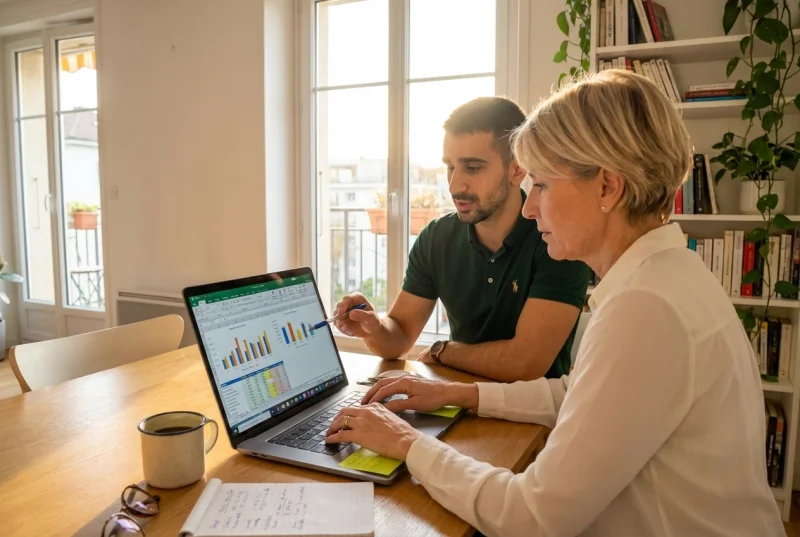
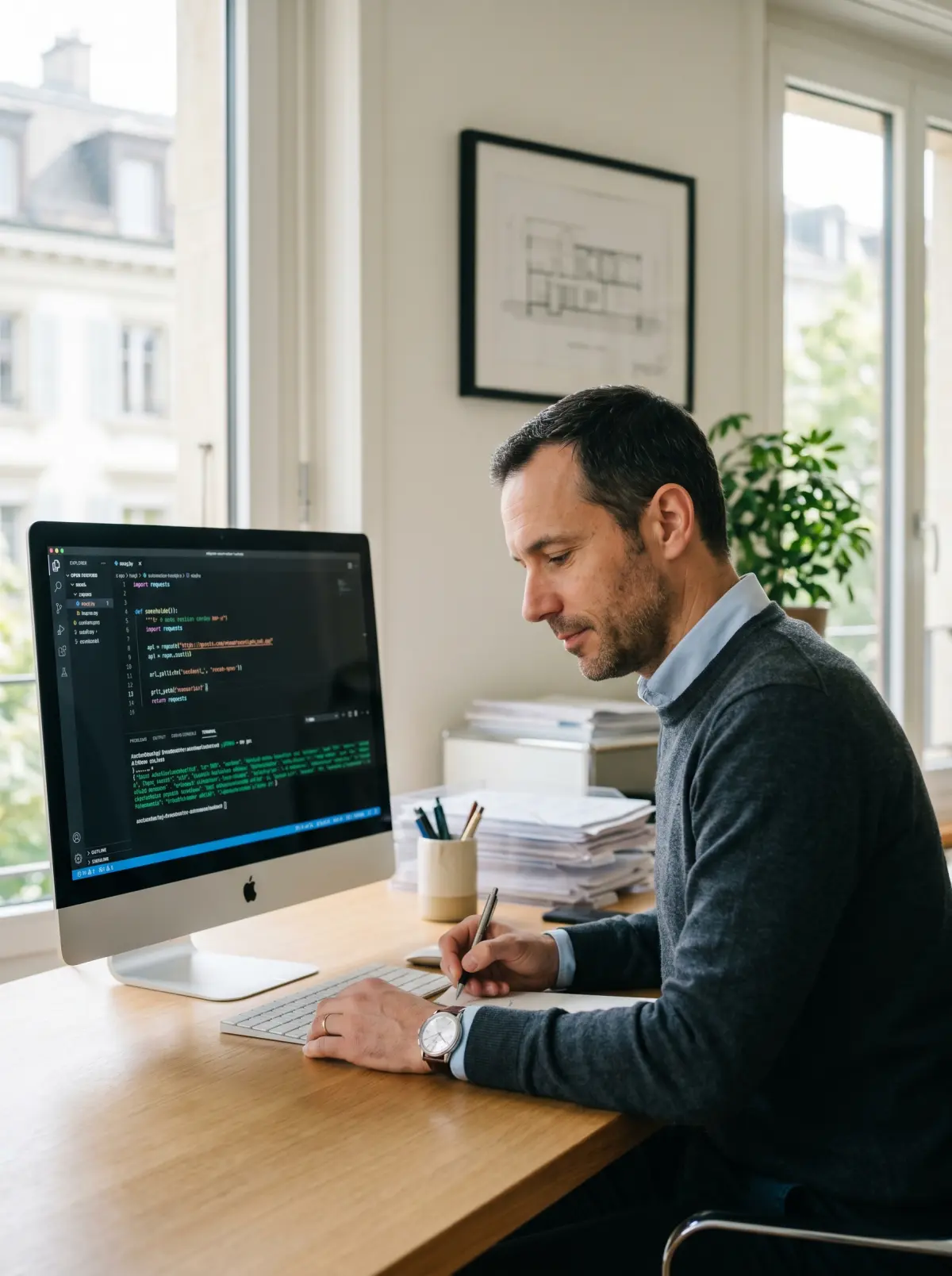
Programming training in Geneva, a first Python project at home
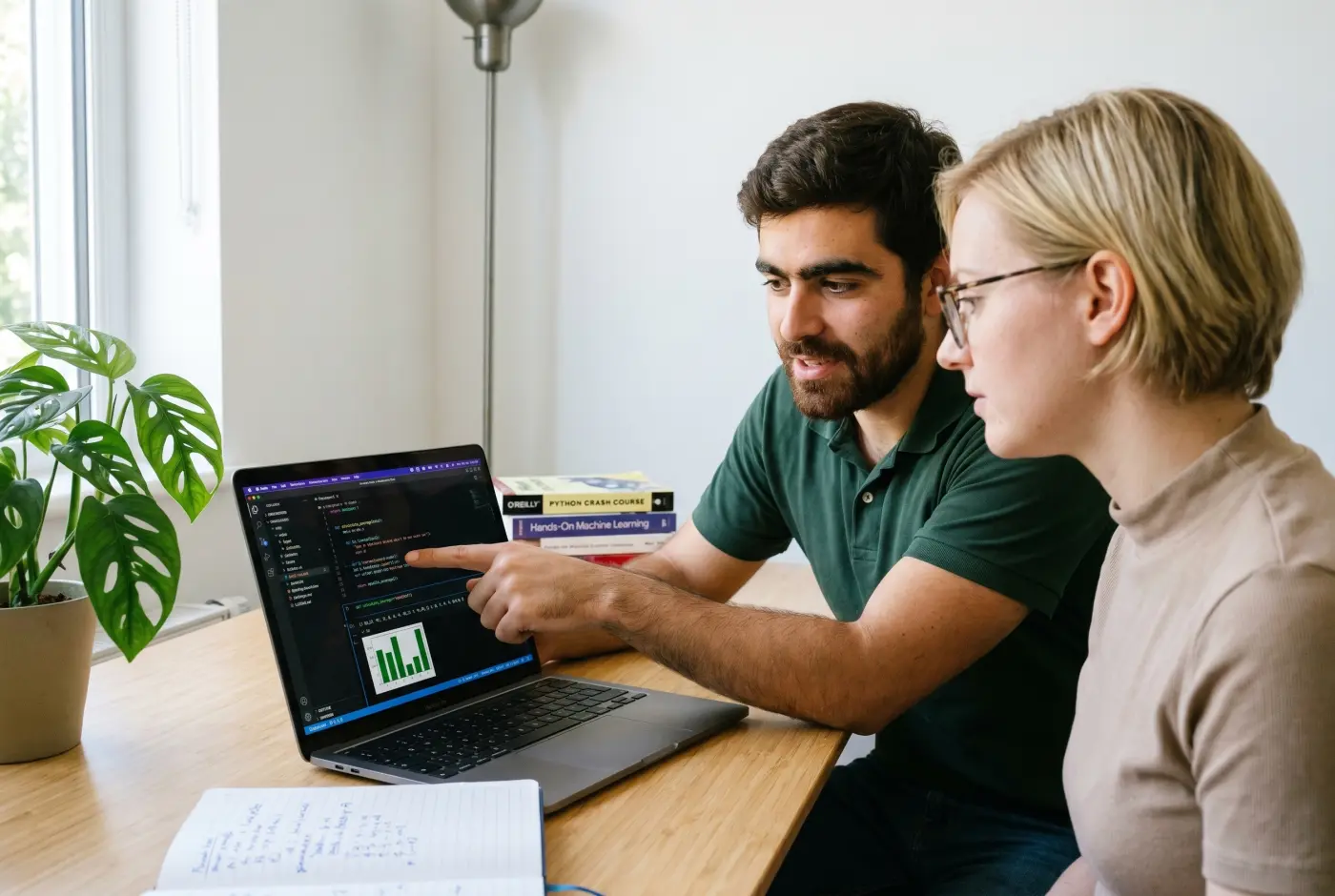
JavaScript lesson in Geneva, a beginner writes a first script and watches it run in the console
In Eaux-Vives · JavaScript
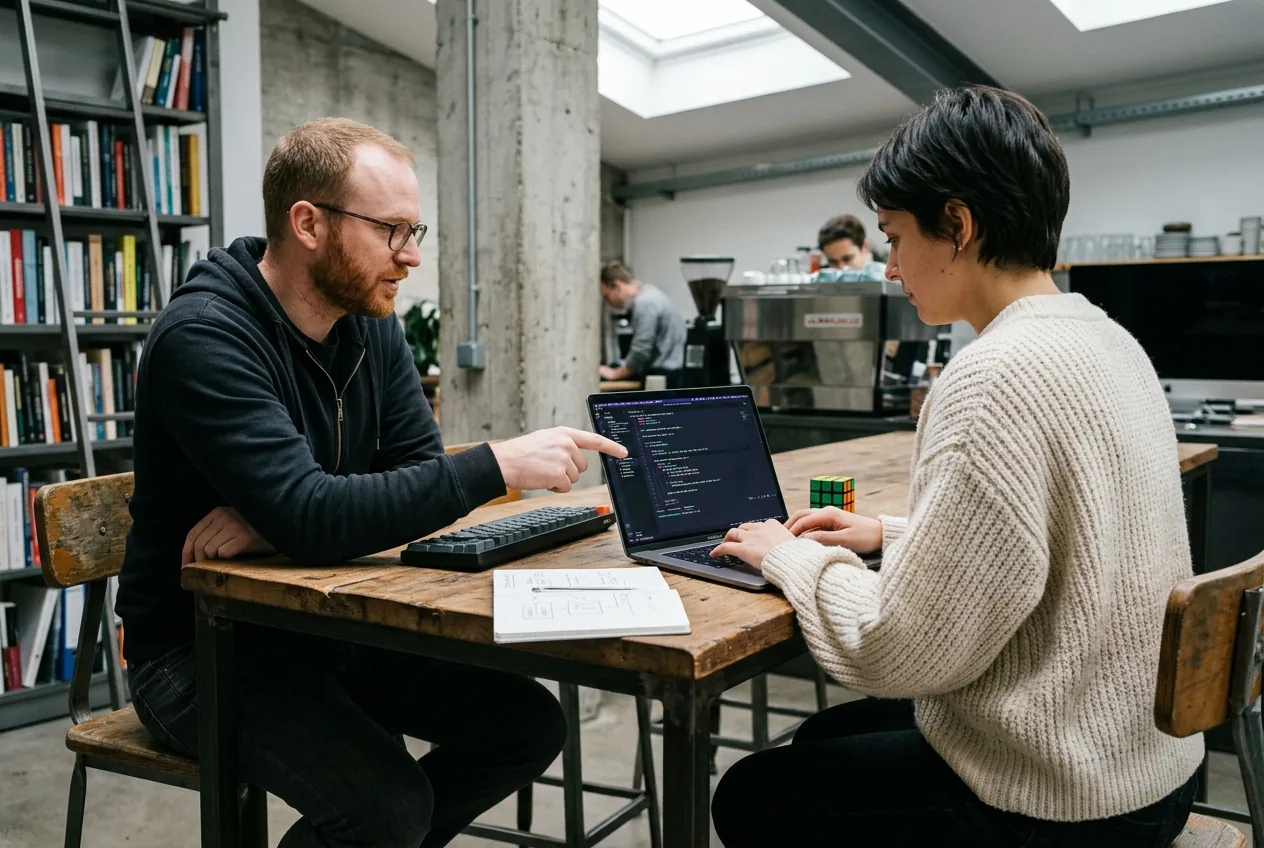
Corporate programming training in Geneva
In a company

463+ Geneva residents trained. Google rating 4.9/5 from 86 verified reviews.

They trust us

The 3 languages you will learn to code in

Python, JavaScript and HTML/CSS: three languages, three uses, one shared programming logic. We help you pick the right entry point for your real goal.

Python

Think, automate, create

The versatile language for automating, analysing, scripting and creating

Useful for:

  • Data analysis (pandas, matplotlib)
  • Automating repetitive tasks
  • Small games and interfaces (pygame, tkinter)
  • Utility scripts and REST API calls
JavaScript

Manipulate, react, connect

Interactive logic in the browser: DOM, events, asynchronous code

Useful for:

  • DOM manipulation (reading and changing the page)
  • Event handling (clicks, typing, scrolling)
  • Async/await and fetch calls
  • First server-side Node.js scripts

HTML/CSS

Mark up, style, animate

The markup and styling languages: structure a document, then give it shape

Useful for:

  • Semantic structure of an HTML document
  • CSS selectors and the box model
  • Modern layout with Flexbox and CSS Grid
  • CSS animations, transitions and keyframes

Where do you start, Python or JavaScript?

Both languages are excellent for starting to code. Your choice depends on what you want to do with it. Here is our decision tree to settle it in 30 seconds.

Python

The language that reads almost like English

Ideal if you want to:

  • Automate and analyse data pandas, matplotlib, automation
  • Understand the logic of code above all readable syntax, first scripts

JavaScript

The language of interactive logic and asynchronous code

Ideal if you want to:

  • Code interactions and asynchronous logic DOM, fetch, async/await
  • Aim for a junior developer job in Geneva Node.js, React, strong demand

A quick comparison across 5 key criteria

Criterion Python JavaScript
Ease of getting started Very readable syntax More permissive syntax
Developer jobs in Geneva Data, finance, banking, the UN Front-end, start-ups, agencies
First real program A calculator or script in 1 h An interactive page in 2 h
Ecosystem and libraries pandas, numpy, pygame npm, fetch, ES6 modules
Automation and business scripts The king of scripting Node works but feels less natural

Our advice: the right answer is the one that keeps you coding every week. Your teacher will take 15 minutes in the first lesson to confirm your choice against your project.

Course programme
for learning to code in Geneva

Three levels to go from zero lines of code to employable junior developer. Python, JavaScript and HTML/CSS covered in depth, lesson after lesson.

Beginner level

You are starting from zero. We set up your environment and you write your first lines of Python or HTML/CSS in lesson 1. Programming logic, syntax, and first programs that genuinely run.

  • Discovering the developer job and the main languages
  • Installing Visual Studio Code and setting up a tidy first project
  • Understanding what a variable is and storing a value in memory
  • Mastering data types: number, text, boolean, list
  • Writing your first Python or JavaScript statements in the console
  • Using arithmetic operators and logical operators
  • Controlling how the code runs with if, else and elif
  • Repeating actions with for and while loops
  • Writing your first functions and understanding parameters
  • Grasping variable scope (local, global)
  • Working with lists, tuples and dictionaries in Python
  • Reading and writing text files with Python
  • Discovering HTML: tags, structure and semantic hierarchy
  • Discovering CSS: selectors, properties, values and the cascade
  • Understanding the box model (margin, padding, border, content)
  • First Python project: a calculator or a guess-the-number game
  • First HTML/CSS project: a personal page styled by hand
  • Reading and fixing your errors with print and the DevTools console
  • Following a tutorial intelligently, without copy and paste
  • Naming best practice (snake_case, camelCase) and indentation
  • Commenting your code usefully, neither too much nor too little
  • Installing Python and Node.js on Mac or PC

Intermediate level

You can read and write code. We build real projects: Python automation, DOM manipulation in JavaScript, CSS Grid layouts and your first versioning with Git.

  • Automating repetitive tasks in Python (renaming files, processing Excel)
  • Working with CSV and JSON data in Python
  • Discovering pandas to analyse a table of data
  • Plotting a first chart with matplotlib
  • Debugging your code with print, pdb and the DevTools
  • Advanced data structures: sets, nested dictionaries
  • Understanding what JavaScript does in the browser
  • Manipulating the DOM: selecting, changing and creating elements
  • Handling click, input and form submission events
  • Changing CSS styling dynamically from JavaScript
  • Validating a form on the client side in JavaScript
  • Storing data in the browser with localStorage
  • Modern layout with Flexbox and CSS Grid
  • Making a page responsive with media queries
  • Animating elements with CSS transitions and keyframes
  • Using the :hover, :focus and :active pseudo-classes
  • Discovering Git and versioning your code locally
  • Pushing your first projects to GitHub
  • Python project: a script that automates sending emails
  • JavaScript project: an interactive page with a counter and a form
  • HTML/CSS project: a responsive static portfolio
  • Reading technical documentation in English without panicking

Advanced level

You think like a developer: OOP, algorithms, REST APIs, asynchronous code. Your projects are published on GitHub, ready to show in an interview or to a school.

  • Object-oriented programming in Python: classes, inheritance, polymorphism
  • Building a small game with Pygame or a graphical interface with Tkinter
  • Calling a REST API with requests in Python or fetch in JavaScript
  • Understanding asynchronous code: promises, async/await in JavaScript
  • Discovering numpy for scientific and matrix computing
  • Advanced data structures: queues, stacks, trees, graphs
  • Recursion and the classic algorithms (sorting, searching)
  • The idea of algorithmic complexity (Big O)
  • Discovering a modern JavaScript framework (React or Vue)
  • Organising your code with ES6 modules and Python imports
  • Project architecture: separating logic, data and presentation
  • CSS custom properties and BEM organisation
  • Testing your code: assert in Python, console.assert in JavaScript
  • Versioning seriously with Git: branches, merges, pull requests
  • Collaborating on GitHub: issues, forks, code review
  • Reading a stack trace and resolving errors cleanly
  • Using ChatGPT and GitHub Copilot intelligently (never blindly)
  • Discovering Node.js and the npm ecosystem
  • Final Python project: a small REST API with Flask
  • Final JavaScript project: an interactive app with local storage and an API
  • Preparing a portfolio of 3 to 5 projects on GitHub
  • First steps with a tech CV and a junior developer interview

How your lessons work

The same simple process for a one-off lesson or a full course. You write your first program in lesson 1, and we consolidate between lessons.

1
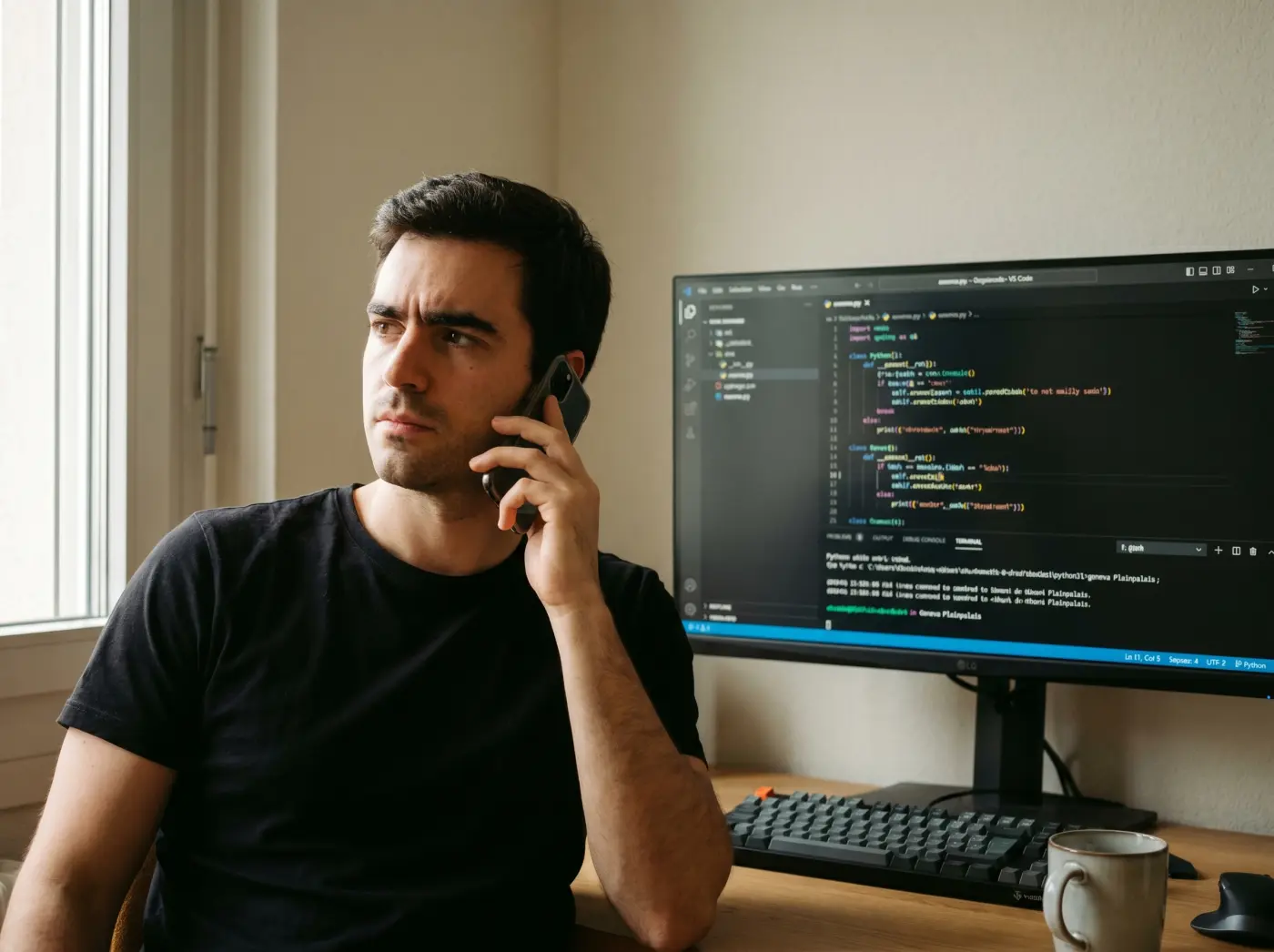
David plans your Python programming lesson in Geneva over the phone, with code visible in VS Code

You call, we plan together

A free 5-minute call. We work out your goal (career change, automation, personal project) and pick the right language to start with. You choose: at your home or in Eaux-Vives.

2
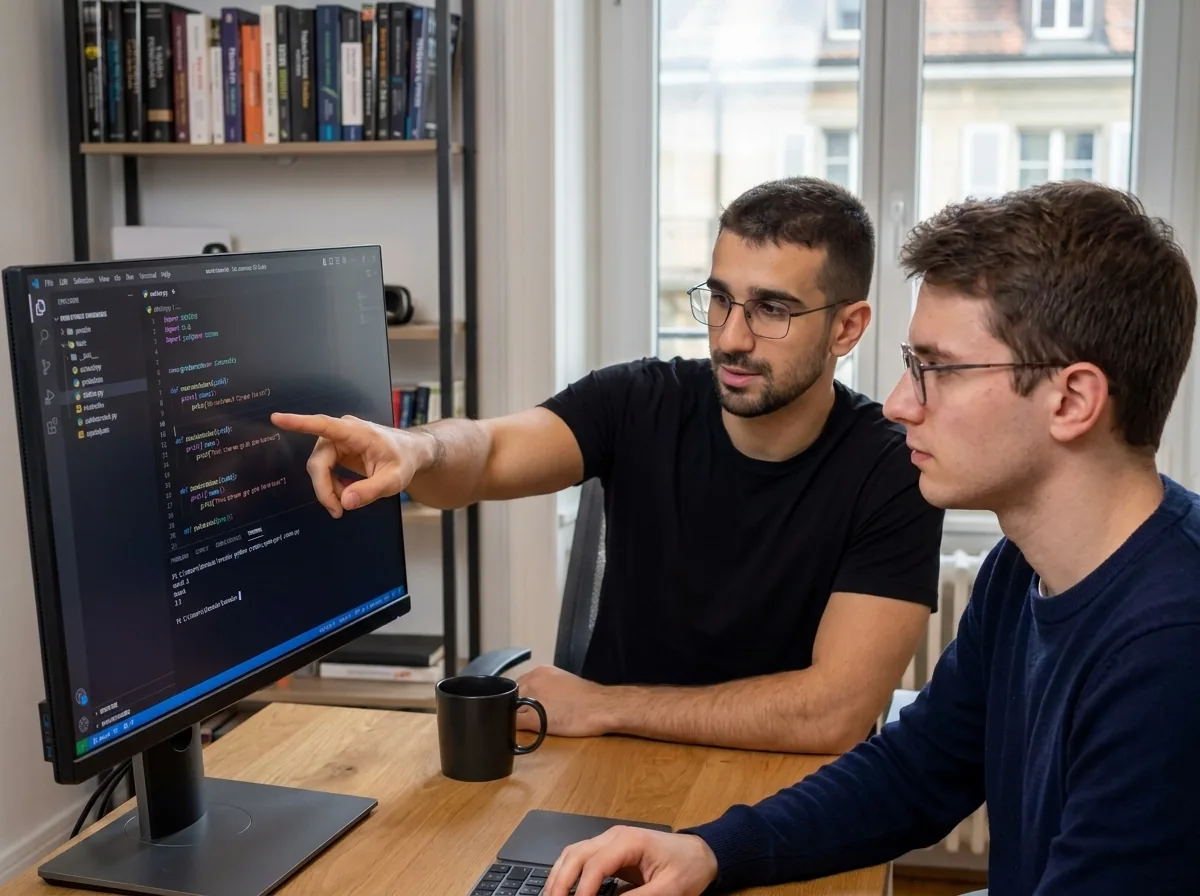
David, a Cours-Informatique.ch teacher, explains a Python function in VS Code to a student, programming lesson in Geneva

Your teacher guides you

Setting up your environment (VS Code, Python, Node.js), your first lines of code, a first real project in lesson 1. We check that every concept has landed before moving on.

3
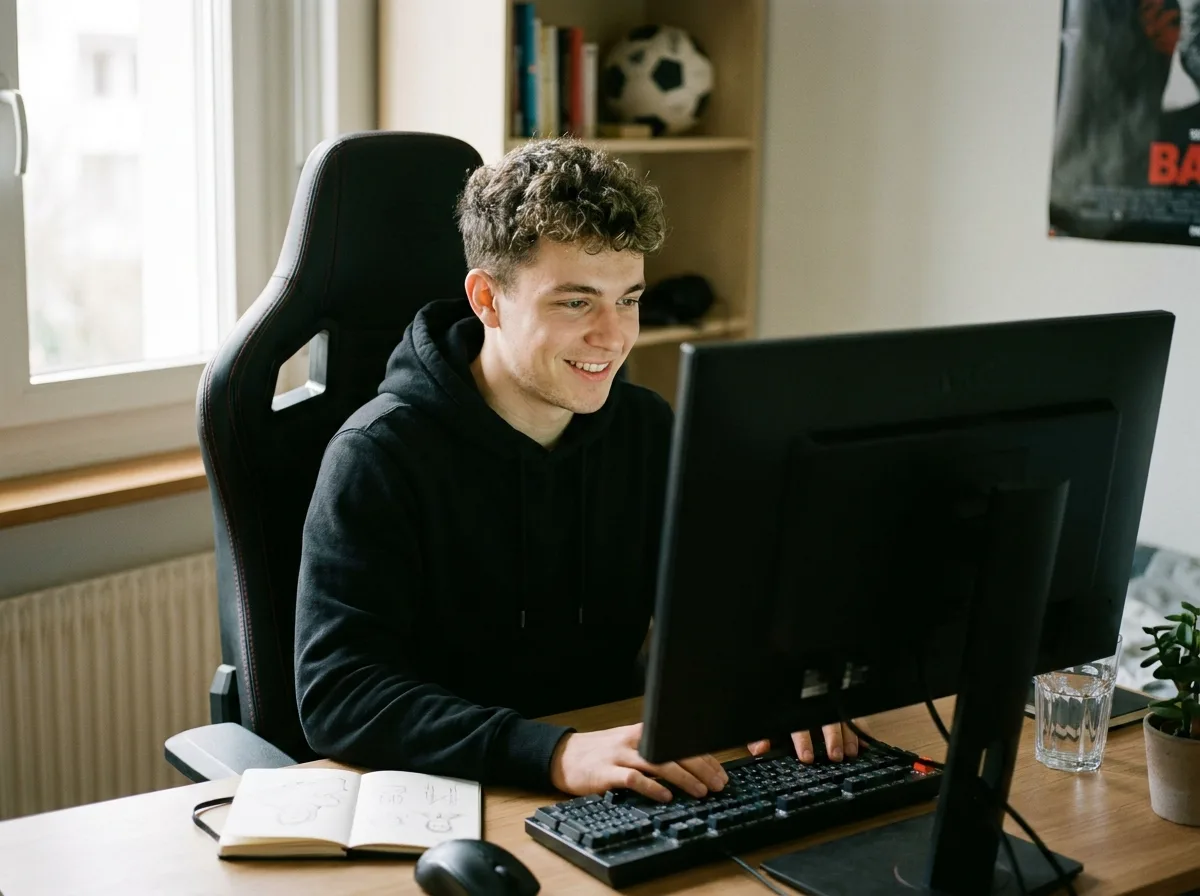
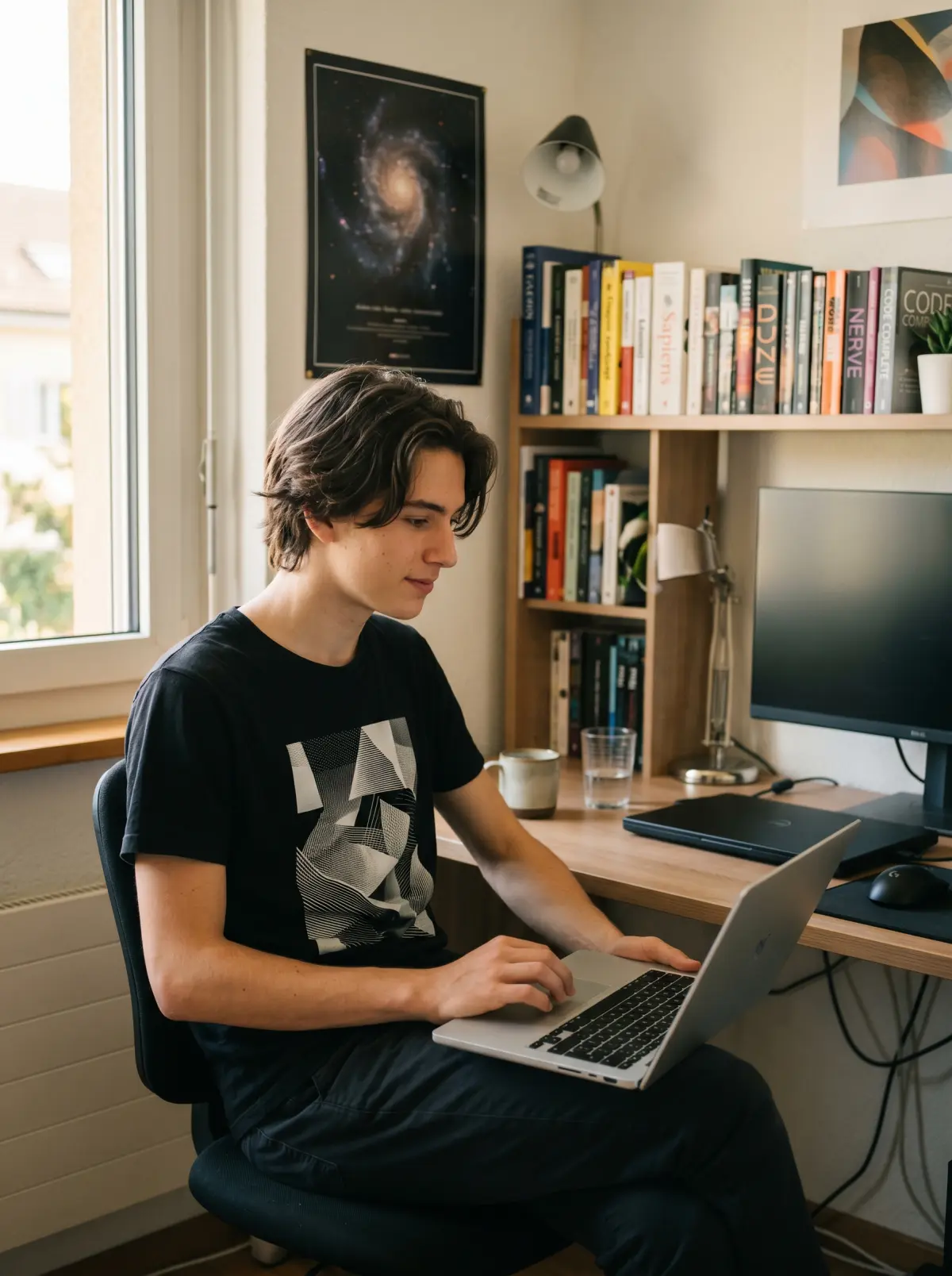
A student smiles at the computer while finishing a project, programming lesson in Geneva

You code and you progress

Between lessons, targeted exercises and small projects to build. Your teacher stays reachable on WhatsApp to unblock any errors. Practice is the key to independence.

Our students, before and after

3 portraits of Geneva residents before and after their learn-to-code course. EPFL preparation, business automation, scientific research: everyone moves forward with their own real goal.

Lucas, 17, a tech-mad secondary school student in Champel
3 months

Python · Algorithms · OOP

Lucas, a secondary school student in Geneva

Lucas, 17

Secondary school student · Champel

I wanted to study computer science at EPFL, but all I had ever done at school was Scratch. Online courses felt far too dry.

A solid base for computer science studies at EPFL. He is confident with Python, algorithms and object-oriented programming (OOP). His application file stands out.

Python Algorithms OOP
Alexandre, 42, an entrepreneur automating his work in Eaux-Vives
5 lessons

Python · Automation · 6 h saved a week

Alexandre, an entrepreneur in Geneva

Alexandre, 42

Entrepreneur · Eaux-Vives

I was spending 6 hours a week copying and pasting data between Excel and our suppliers. Sheer misery.

Python scripts that read the emails, pull out the data and fill in Excel. He saves 6 hours a week, every week.

Python Automation 6 h saved a week
Léa, 28, a biology PhD student at UNIGE in Plainpalais
4 months

Python · pandas · Data viz

Léa, a PhD student in Geneva

Léa, 28

PhD student at UNIGE · Plainpalais

For my thesis, I was making every chart by hand in Excel. Not reproducible, and hours lost with every correction.

She is confident with Python, pandas, matplotlib and seaborn. Her analysis pipeline runs on its own and her thesis figures are ready to publish without retouching.

Python pandas Data viz

A question about the programming course?

Let us talk it through for 10 minutes on the phone. It is free, with no commitment. And we answer honestly: if it is not right for you, we will say so.

Certificate of attendance
for learning to code in Geneva

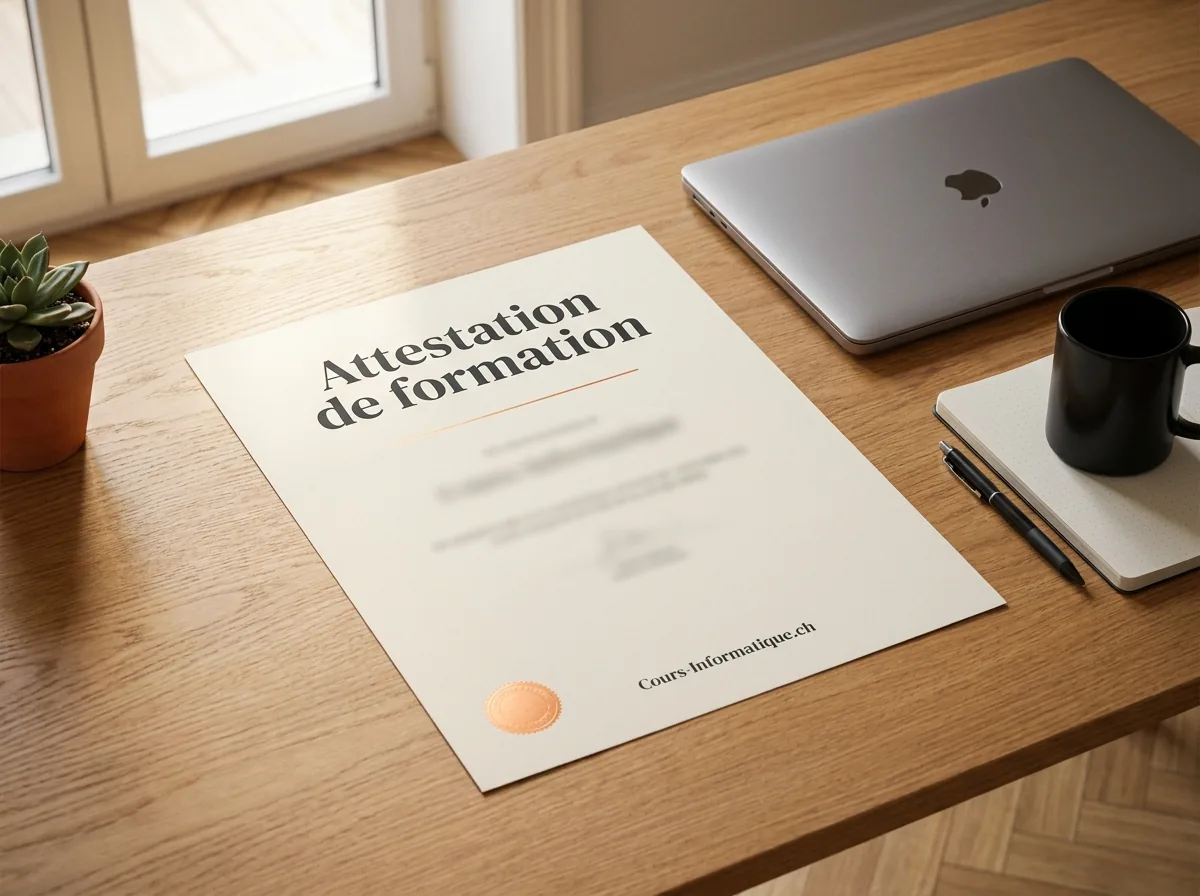
At the end of your course we give you a personalised certificate of attendance, plus a GitHub portfolio with your projects. A concrete asset for a move into development, an application to EPFL or HEPIA, or a junior developer interview in Geneva.

Cours-Informatique.ch certificate of attendance, Python and JavaScript programming training in Geneva
  • Languages covered: Python, JavaScript, HTML/CSS
  • Detailed skills acquired (variables, functions, OOP, REST API, async, Git)
  • Number of hours of training completed
  • Real projects hosted on your GitHub (developer portfolio)

More than a certificate: you leave with your own coding projects (a small Pygame game, Python automation scripts, an interactive JavaScript page, a mini REST API). The best certificate of all is your code on GitHub.

An honest comparison
for programming in Geneva

We are not the only option. Here are the serious alternatives in Geneva in 2026, and what genuinely differs.

Criterion Cours-Informatique.ch Our offer Intensive bootcamp in Geneva (Le Wagon, Ironhack and similar) Independent teacher (Anibis, Malt, LinkedIn) freeCodeCamp, The Odin Project, YouTube
Format Always one to oneGroups of 15 to 30 peopleOne to one, but variableOn your own, by trial and error
Pace Your goal, your paceFull time, fixed syllabusWhenever the teacher is availableWhenever you can, with no structure
Location Your home (free in Eaux-Vives) or our Eaux-Vives officeOn their premises (Battelle, Carouge)Varies with the arrangementAt home
Follow-up and adaptation Homework, WhatsApp, certificate of attendanceAlumni network, partial job placementDepends on the teacher, rarely structuredForums, Discord, no dedicated human

The best choice depends on your profile. Group courses are perfect if you are looking for social contact. Free tutorials suit you if you learn on your own. We are at our best when you want a concrete result, fast, without learning ten useless things and staying stuck on the one that matters.

How long does it take to learn?

Learning to code takes regularity and a framework: the first steps give you a real grasp of the logic, and every well-guided hour is worth several days of fumbling on your own.

Step 1

Discovery pack

1 to 5 h of one-to-one lessons

  • Understand programming logic (variables, conditionals, loops, functions) and write your first Python scripts that genuinely run.
  • Discover HTML and CSS as markup and styling languages, and structure your first semantic page.
Step 2

Going further

6 to 12 h of one-to-one lessons

  • Automate repetitive tasks in Python (processing files, sending emails, handling Excel tables with pandas).
  • Manipulate the DOM in JavaScript and handle events, local storage and fetch calls.
Step 3

Mastery

13 to 20 h of one-to-one lessons

  • Write object-oriented code, structure your data and call REST APIs with Python (Flask) or Node.js.
  • Use Git and GitHub to version your code, publish your projects and build a developer portfolio.

These steps are orders of magnitude. We work out the exact number of hours together, based on your goal, your pace and your availability. Call us for free personalised advice.

Frequently asked questions
about learning to code

How long does it take to learn to program from scratch?

To write your first useful scripts without help, allow 20 to 30 hours of one-to-one lessons spread over 2 to 4 months. In 2026, that is the standard threshold for working on your own as a Python or JavaScript beginner.

  • 5 to 8 hours: you write a simple script (automating a task, handling a file).
  • 15 to 20 hours: you build a small complete application (interface, logic, saving data).
  • 30 to 50 hours: you are aiming at a career change, a first professional project, or extra income.

Call 078 238 20 71 and we will work out together how many lessons suit your exact goal.

Python or JavaScript: which one should you start with in 2026?

It depends on your goal, and we settle it together in 10 minutes on the phone.

  • Python if you are aiming at data analysis, automation, artificial intelligence, business scripts, or roles in banking and research. It is also the most readable language to start with.
  • JavaScript if you are aiming at the web (interactive sites, online applications), front-end jobs in Geneva, or if you want to see your projects run in a browser straight away.

Either way, the fundamentals (variables, conditionals, loops, functions) are the same. Moving from the first to the second then takes 5 to 10 hours. Starting with Python is often gentler for a complete beginner.

Do you need any prior knowledge to take a programming course?

No technical prerequisites. You do not need to know how to code, and you do not need advanced maths. Being able to use a computer day to day is enough (browsing the internet, opening a folder, installing an application).

What we set up together in the very first lesson:

  • The Python or Node.js environment on your Mac or PC.
  • A free code editor (VS Code).
  • A tidy projects folder.

After 2 hours you leave with your first working program. No jargon, and nothing to study before you come.

What job opportunities are there in Geneva after a programming course?

Geneva has a structural shortage of developers in 2026, according to the Adecco index and the Swiss association for executive employment. The most sought-after roles:

  • Front-end web developer (JavaScript, React): 75 000 to 110 000 CHF gross per year for a junior in Geneva.
  • Python developer (data, back-end, automation): 80 000 to 120 000 CHF as a junior, in high demand in private banking and at the UN.
  • Data analyst (Python + SQL): the fastest career change, 85 000 to 110 000 CHF as a junior.

Our course is not a replacement for a 15 000 CHF intensive bootcamp, but it gives you solid foundations to step onto one of these paths or strengthen your current CV.

What budget should you plan for a full programming course?

It all depends on the level you are aiming for. Orders of magnitude in Geneva in 2026:

  • Discovery (10 to 15 hours): 1 400 to 2 100 CHF. You write your first useful scripts.
  • Comfortable level (20 to 30 hours): 2 800 to 4 200 CHF. You work on your own in one language (Python or JavaScript).
  • Career change (40 to 60 hours): 5 600 to 8 400 CHF spread over 6 to 9 months. You have a portfolio of 3 to 5 real projects.

Compare that with the intensive bootcamps in Geneva charging 12 000 to 18 000 CHF for 10 full-time weeks. Our advantage: no career break, a pace built around you, one dedicated teacher.

Is the course suitable for a career change?

Yes, and it is actually the most common profile we see in Geneva. Successful career changes usually follow this path:

  • Phase 1 (20 to 30 h): mastering one language (Python or JavaScript) plus your first personal projects.
  • Phase 2 (20 to 30 h): specialising (full-stack web, data, automation) plus a GitHub portfolio.
  • Phase 3 (10 to 15 h): preparing a tech CV, a developer LinkedIn profile and technical interviews.

Allow 6 to 12 months in total alongside your current job. If you are unemployed in Geneva, the OCE can cover part of the cost when you present a retraining plan. We help you put it together.

I want to learn for my own project, not for work. Is this for me?

Absolutely. That kind of motivation makes you progress faster than average. Typical projects we support in Geneva:

  • A tool for your business (stock management, invoicing, automating admin tasks).
  • A simple Python game with Pygame (for you, your children or your grandchildren).
  • An interactive site in JavaScript for your association, your blog or your hobby.
  • A mobile or web application for one specific everyday need.

We start from your project in the very first hour. No abstract syllabus: we code what matters to you.

What is the difference between a course and a certified programming qualification?

At Cours-Informatique.ch we offer tailor-made one-to-one lessons, not a qualification recognised by a state body. At the end, we give you a detailed certificate of attendance setting out the languages and skills covered, the number of hours and the projects you completed.

  • For an official federal diploma in programming, look at the Brevet fédéral d'informaticien or the HES schools such as HEPIA.
  • For a vendor certification (Microsoft, Google Cloud, AWS), we can prepare you for the exams.
  • For a portfolio that makes you employable straight away, our certificate plus your GitHub projects are enough in 90% of cases in Geneva.
Does the learn-to-code course lead to a certification in Geneva?

At the end of your learn-to-code course, we give you a personalised certificate of attendance that sets out the languages covered (Python, JavaScript, HTML/CSS), the skills acquired (variables, functions, loops, OOP, REST API, async) and the number of hours completed. That certificate is worth putting on your CV for employers in Geneva, in particular for a move into development, data or business automation.

You also leave with your own coding projects (a small Pygame game, Python automation scripts, an interactive JavaScript page) hosted on your GitHub: concrete proof of your developer skills.

How much does a programming lesson or course cost in Geneva?

Our one-to-one lessons and learn-to-code courses are charged at 140 CHF/h, with no commitment and no subscription. You decide the pace that suits you, lesson by lesson.

  • Travel to your home: included in the Eaux-Vives area, 20 to 100 CHF for other neighbourhoods and municipalities depending on distance.
  • Gift cards: 2 h (300 CHF), 4 h (600 CHF), 8 h (1 200 CHF), 12 h (1 800 CHF), valid for 12 months.
  • Referrals: recommend someone close to you and receive one free hour of lessons.
  • Annual training voucher: if the course serves your working life, you can apply to the State of Geneva for a subsidy, before the course starts.

Call 078 238 20 71 for free advice on the number of hours that fits your goal (a move into development, Python automation, EPFL preparation, a personal project and so on).