










Cybersecurity
No.1 for cybersecurity courses in French-speaking Switzerland

Cybersecurity lessons and trainingFor beginners in Geneva

We work with individuals, families, seniors and SMEs, in one-to-one lessons or as a full training course. Learn to recognise scams, secure your passwords and back up your data. Your teacher comes to you, with your own devices. No commitment.
Happy student Happy student Happy student Happy student Happy student
4.9/5
463+ happy clients in Geneva
Lessons start right away, no commitment At your home or in our offices See the programme
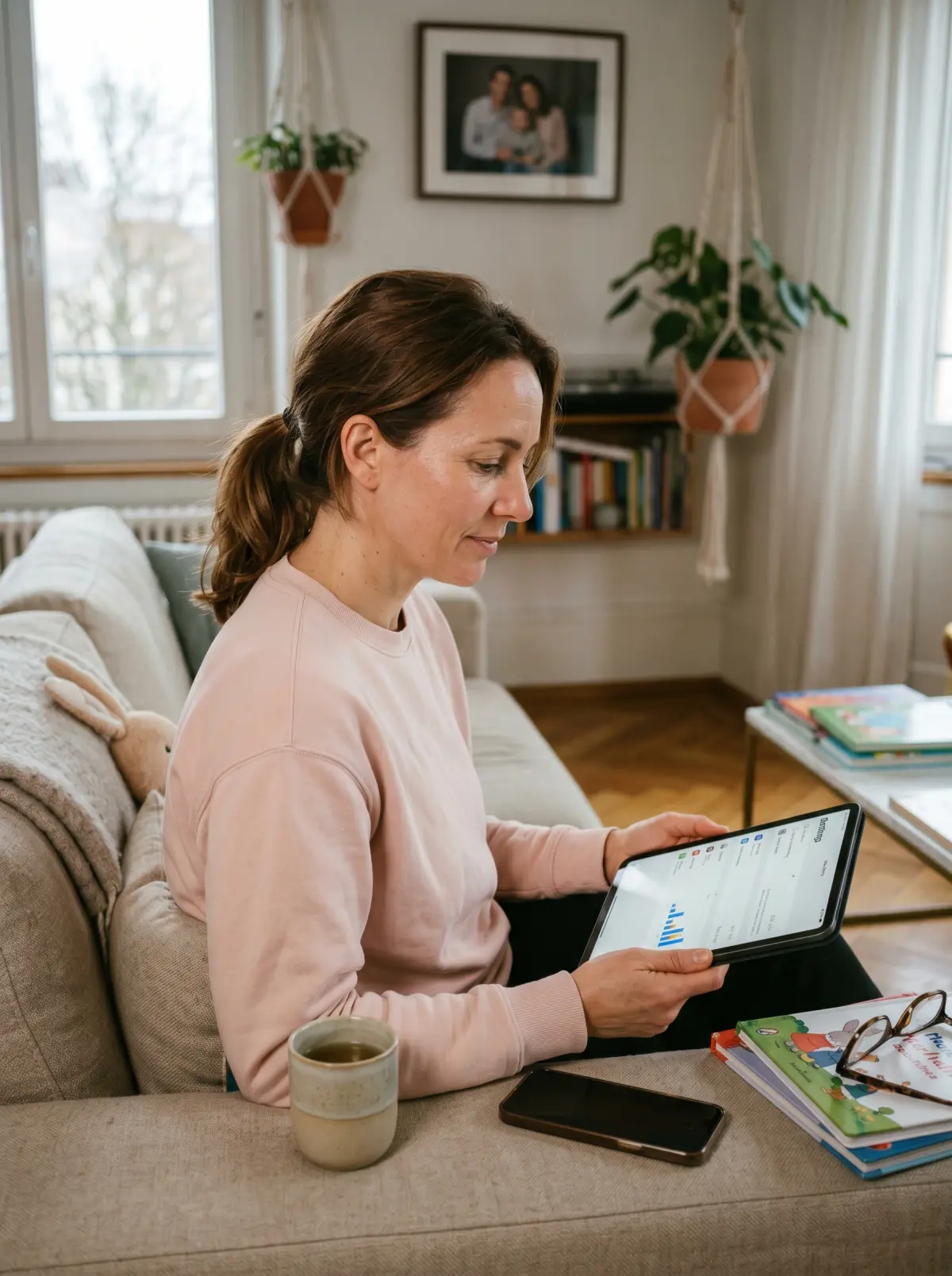
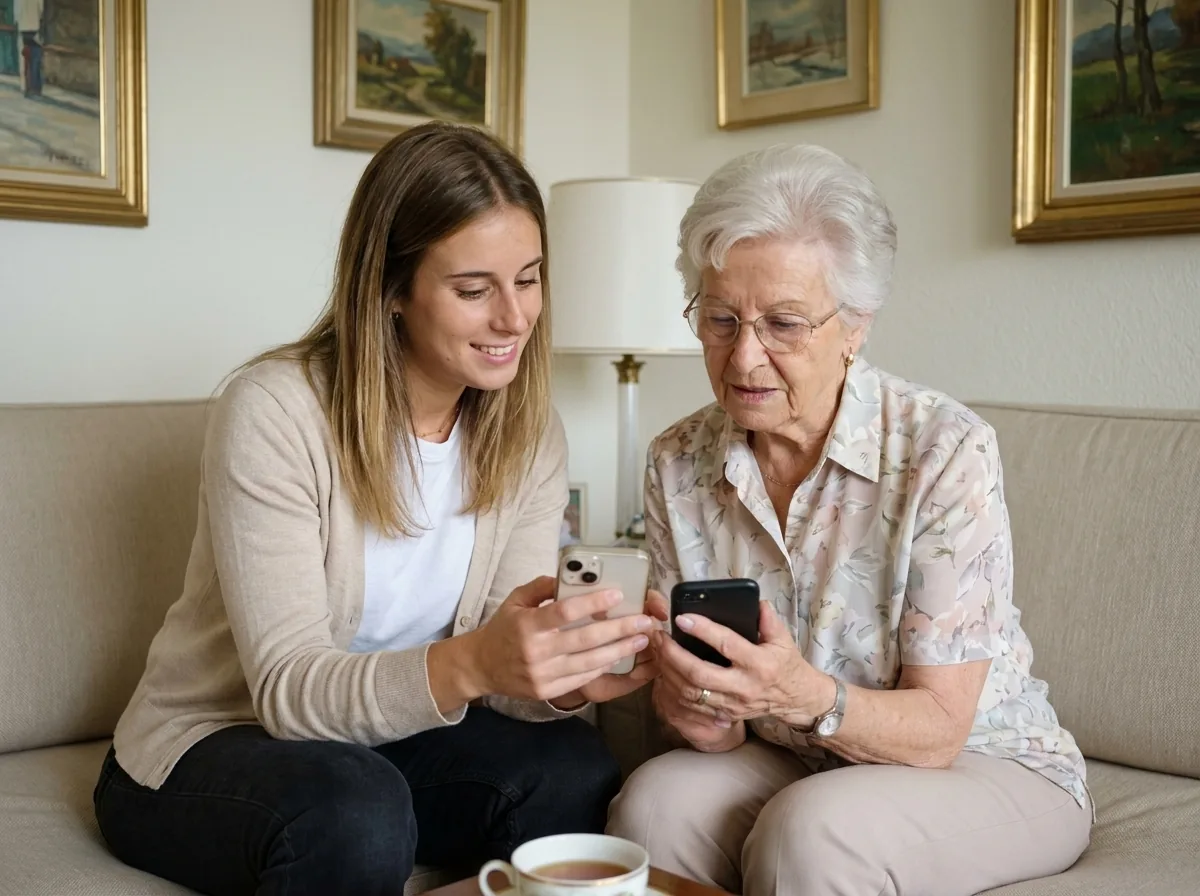
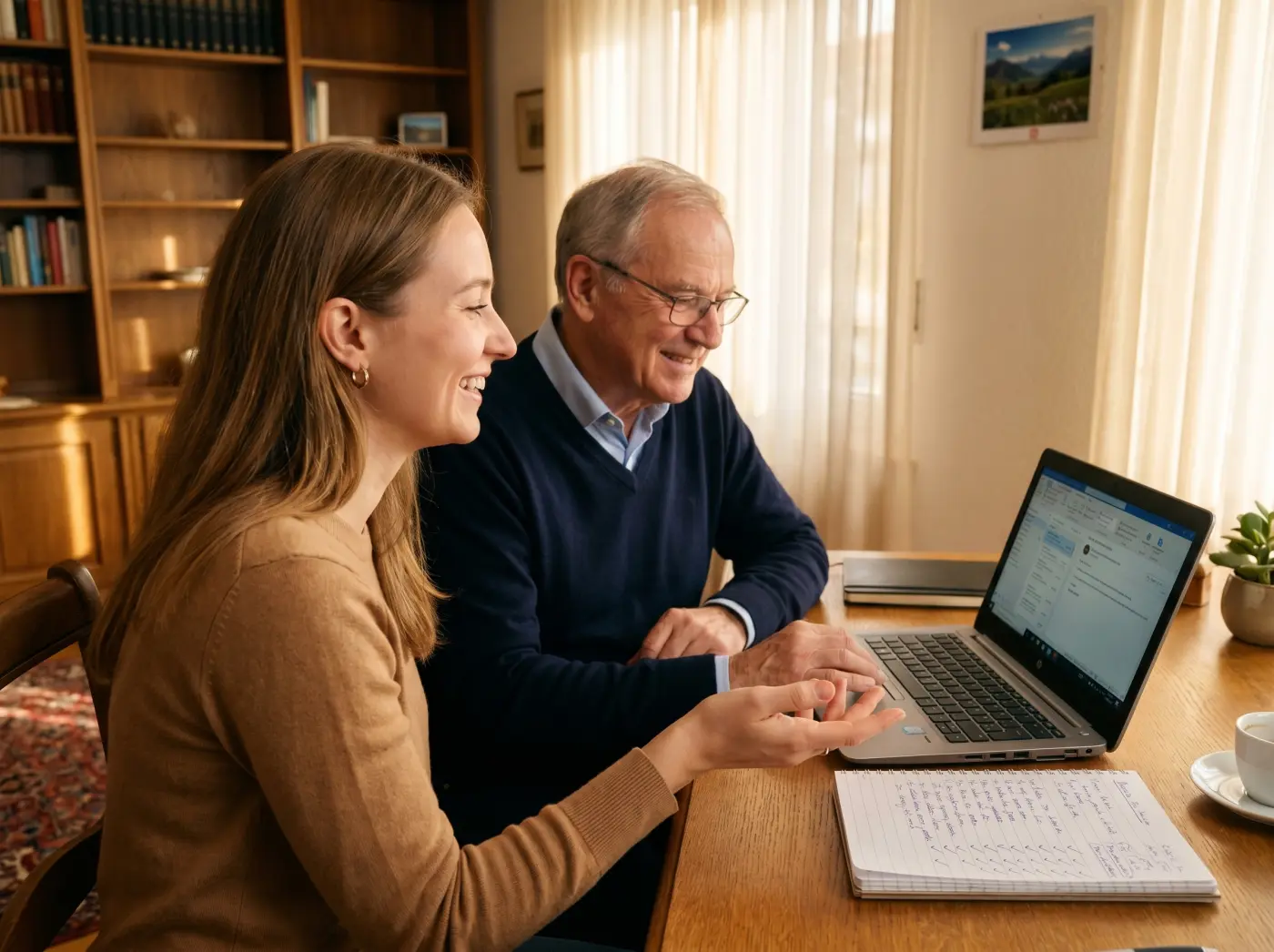
Turning on two-factor authentication (2FA) on a smartphone, cybersecurity lesson in Geneva
Cybersecurity training in a company in Geneva, David training an SME manager
In-company · SMEs
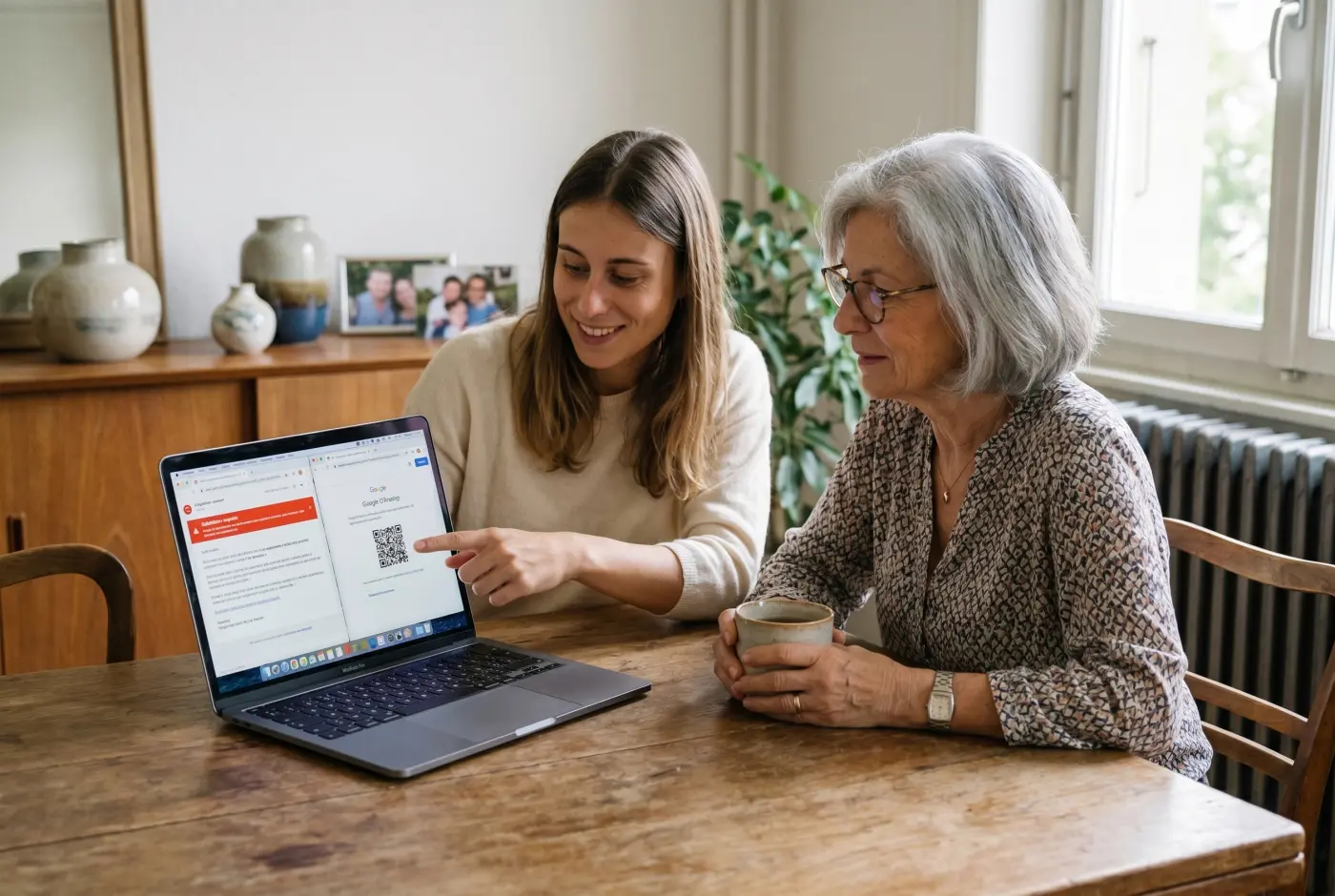
Recognising a phishing email, cybersecurity workshop in Geneva
Phishing · Detection

463+ people trained in Geneva. Google rating 4.9/5 from 86 verified reviews.

They trust us

The 4 pillars of your
cybersecurity in Geneva

You do not need to become an IT expert. These 4 pillars cover 95% of everyday risks, whether you are an individual, a family or an SME.

Passwords

Protect, generate, sync

Create strong passwords and turn on 2FA

Useful for:

  • Unique passwords
  • 1Password or Bitwarden manager
  • 2FA on Gmail and banking
  • Modern passkeys

Anti-phishing

Spot, analyse, report

Recognise scams by text, email and phone

Useful for:

  • Fake La Poste texts
  • Spoofed PostFinance emails
  • Suspicious AVS calls
  • WhatsApp traps

Backup

Back up, restore, secure

Never lose photos or documents again

Useful for:

  • iCloud and Google Drive
  • Time Machine on Mac
  • The 3-2-1 rule
  • Ransomware protection

Safe browsing

Encrypt, block, anonymise

Browse with no traces and no risks

Useful for:

  • ProtonVPN or NordVPN
  • Secure public Wi-Fi
  • Ad blocker
  • Instagram privacy

5 common scams in Geneva in 2026

Real cases our Geneva students have been through. For each one: how the scam works, the signals that fool people, and what to do if you are targeted.

1

Fake La Poste text message

Your parcel is being held

How it works

A text says your parcel is waiting on a 2 CHF surcharge. The link leads to a page identical to the Swiss Post site, which harvests your bank details.

Signals that fool people

Unknown number, shortened link (bit.ly, post-ch.info), urgency, a payment request.

What to do

Never click. Check directly on post.ch or in the official La Poste app.

2

Fake AVS or SUVA phone calls

Sorting out your file

How it works

Someone poses as an AVS or SUVA officer, claims there is an administrative problem and asks for your AVS number and IBAN to sort it out. The call sounds official.

Signals that fool people

An odd accent, pressure to act fast, a request for personal data over the phone.

What to do

Hang up. AVS and SUVA never call to ask for your data. Call back on the official number.

3

Twint phishing

Confirm a transaction

How it works

A text or email imitates Twint and asks you to "confirm" a suspicious payment. The link goes to a fake login page that steals your banking credentials.

Signals that fool people

An unsolicited message, an external link, a slightly blurry logo, urgency.

What to do

Open the Twint app directly. No bank ever asks you to confirm by text with a link.

4

Fake LinkedIn recruiter

A golden offer, far too good

How it works

An unknown LinkedIn profile offers a remote job paying 150 000 CHF. It asks for your CV, your AVS number, a copy of your ID and sometimes a transfer for "equipment".

Signals that fool people

A recent profile, few connections, an unrealistic salary, requests for personal documents.

What to do

Check the company on its official website. Never share your AVS number or your ID documents with a stranger.

5

Romance scam

Online dating

How it works

On a dating site, someone seems perfect. After a few weeks they mention a medical emergency or a project, and ask for a bank transfer.

Signals that fool people

Refuses video calls, moving stories, repeated requests for money, emotional pressure.

What to do

Never send money to someone you met online. Talk to someone close to you or contact police.ch.

During the course, we go through your own suspicious texts and emails together. You leave with a checklist on your phone so you can decide in 3 seconds.

Cybersecurity training
programme in Geneva

Three levels so you can move at your own pace: beginner, intermediate, advanced. Your teacher adapts every session to your real situation.

Beginner level

The foundations to protect yourself without any technical stress. Strong passwords, phishing detection, your first reflexes.

  • Create a genuinely strong password
  • Avoid the classic mistakes (birthday, 123456)
  • Stop reusing the same password everywhere
  • Write your passwords down safely
  • Turn on two-factor authentication (2FA) on Gmail
  • Spot a classic phishing email
  • Detect a suspicious URL before you click
  • Identify fake texts from La Poste or your bank
  • Never give out your code over the phone
  • Check the sender before opening an attachment
  • Turn on automatic iCloud backup on your iPhone
  • Turn on Google Drive or OneDrive on your computer
  • Back up your photos automatically
  • Check that your backups actually work
  • Restore a file you deleted by mistake
  • Understand what private browsing (incognito) really does
  • Manage cookies in Chrome and Safari
  • Turn on Do Not Track in your browser
  • Install a reliable ad blocker

Intermediate level

You know the basics, so we build your fortress. 2FA, a password manager, backups, VPN.

  • Install and set up 1Password or Bitwarden
  • Import your passwords from your browser
  • Generate unique passwords automatically
  • Sync your logins across your devices
  • Share a password with your family safely
  • Spot a fake login page (PostFinance, UBS)
  • Read the headers of a suspicious email
  • Identify WhatsApp and Messenger scams
  • Report phishing to the Swiss authorities
  • Set up Time Machine on a Mac with an external drive
  • Set up File History on Windows
  • Apply the 3-2-1 rule to your critical data
  • Encrypt an external backup drive
  • Choose and install a VPN (NordVPN, ProtonVPN)
  • Connect safely on public Wi-Fi
  • Set your privacy on Facebook and Instagram
  • Delete your Google data and search history

Advanced level

You are moving up a level: GDPR for the self-employed, advanced encryption, an audit of your online accounts.

  • Use passkeys to replace passwords
  • Manage physical YubiKey security keys
  • Check your leaked passwords with HaveIBeenPwned
  • Recognise targeted spear phishing attacks
  • Protect yourself from vishing (phone call scams)
  • Train your team to spot fake internal CEO emails
  • Automate backups with a Synology NAS
  • Test your data restores on a regular basis
  • Protect yourself from ransomware with an offline backup
  • Set up encrypted DNS for more anonymity
  • Browse with Tor for maximum privacy
  • Audit your online digital footprint

How your cybersecurity lesson
or training course works

The same simple process for a one-off lesson or a full training course in Geneva.

1
Romane, teacher at Cours-Informatique.ch, reassuring a worried caller about a cybersecurity lesson in Geneva

You call, we plan it together

A free 5-minute call. We work out your risks, from the scams you have received to the devices to secure and the family to protect, then set the priority modules. At your home or in Eaux-Vives.
2
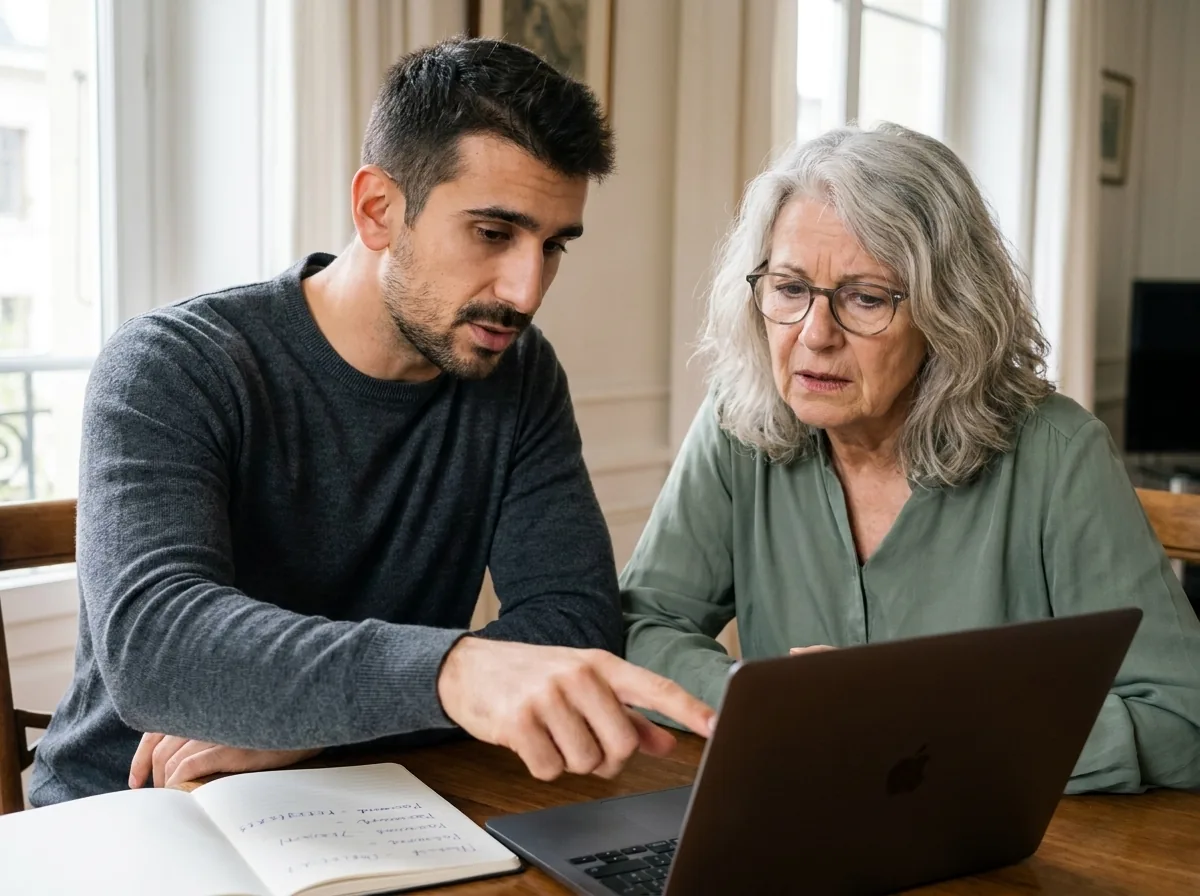
David, teacher at Cours-Informatique.ch, showing a senior woman how to recognise a phishing email in Geneva

Your teacher secures it all with you

The lesson takes place on your own devices (iPhone, Mac, PC, iPad). We turn on 2FA, install a password manager and set up your backups. Everything stays active after the lesson.
3
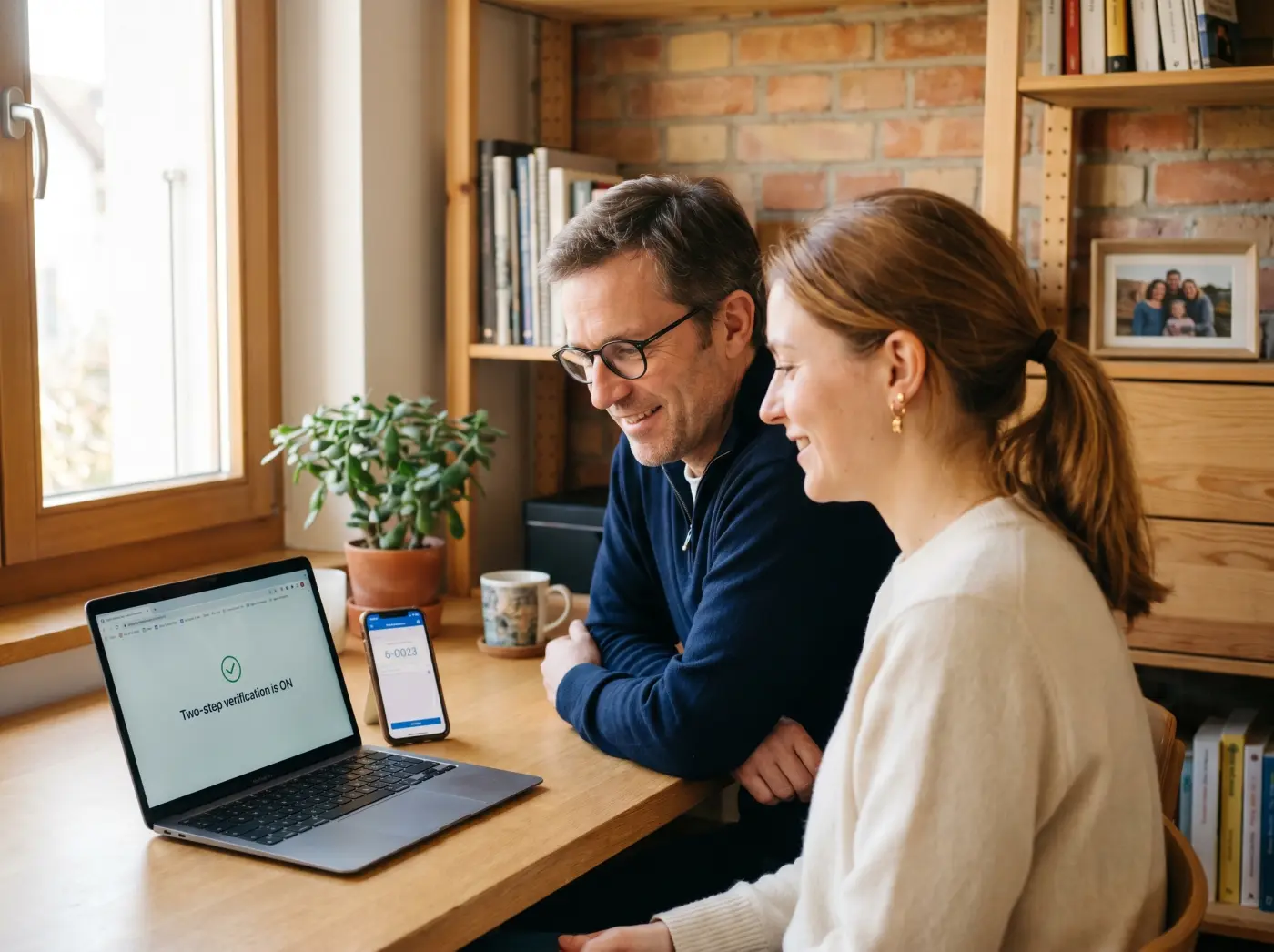
A father with Romane after turning on Google two-factor authentication in Carouge, Geneva

You practise and stay alert

After the lesson, you keep a checklist on your phone. Your teacher stays available on WhatsApp to check suspicious messages with you. Zero judgement if you are unsure.

Our students before and after

3 portraits of Geneva residents before and after their cybersecurity training. Seniors, parents, self-employed people: everyone gets there.

Claudine, 72, a careful retiree in Eaux-Vives
2 sessions

SMS scams · Phishing · 2FA

Claudine, retired

Claudine, 72

Retired · Eaux-Vives

I made a bank transfer after a text message. I really thought it was La Poste.

Claudine spots text scams in 3 seconds, warns her family and reports suspicious messages straight from her phone.

Phishing Suspicious texts 2FA
Sophie, 40, a concerned parent in Plainpalais
4 sessions

Parental controls · Backup · Children online

Sophie, parent

Sophie, 40

Parent · Plainpalais

My children were exposed on social media. I had no idea where to start to protect them.

Parental controls set up on every screen, the family protected, automatic iCloud backup running. Sophie now runs digital security for the whole household.

Parental controls iCloud backup Family
Marc, 50, a freelance professional in Champel
5 sessions

3-2-1 backup · Time Machine · Ransomware

Marc, self-employed

Marc, 50

Self-employed · Champel

I lost 2 years of invoices in a disk crash. Nothing was backed up.

iCloud plus an encrypted external drive, the 3-2-1 rule applied to the letter. Marc is no longer afraid of losing a file or being hit by ransomware.

3-2-1 backup Time Machine Anti-ransomware

A question about the cybersecurity course?

Let us talk it through for 10 minutes on the phone. It is free, with no commitment. And we answer honestly: if it is not right for you, we will say so.

Cybersecurity training
certificate of attendance

At the end of your training, we give you a personalised certificate of attendance. A concrete asset to show off your digital security skills in Geneva.
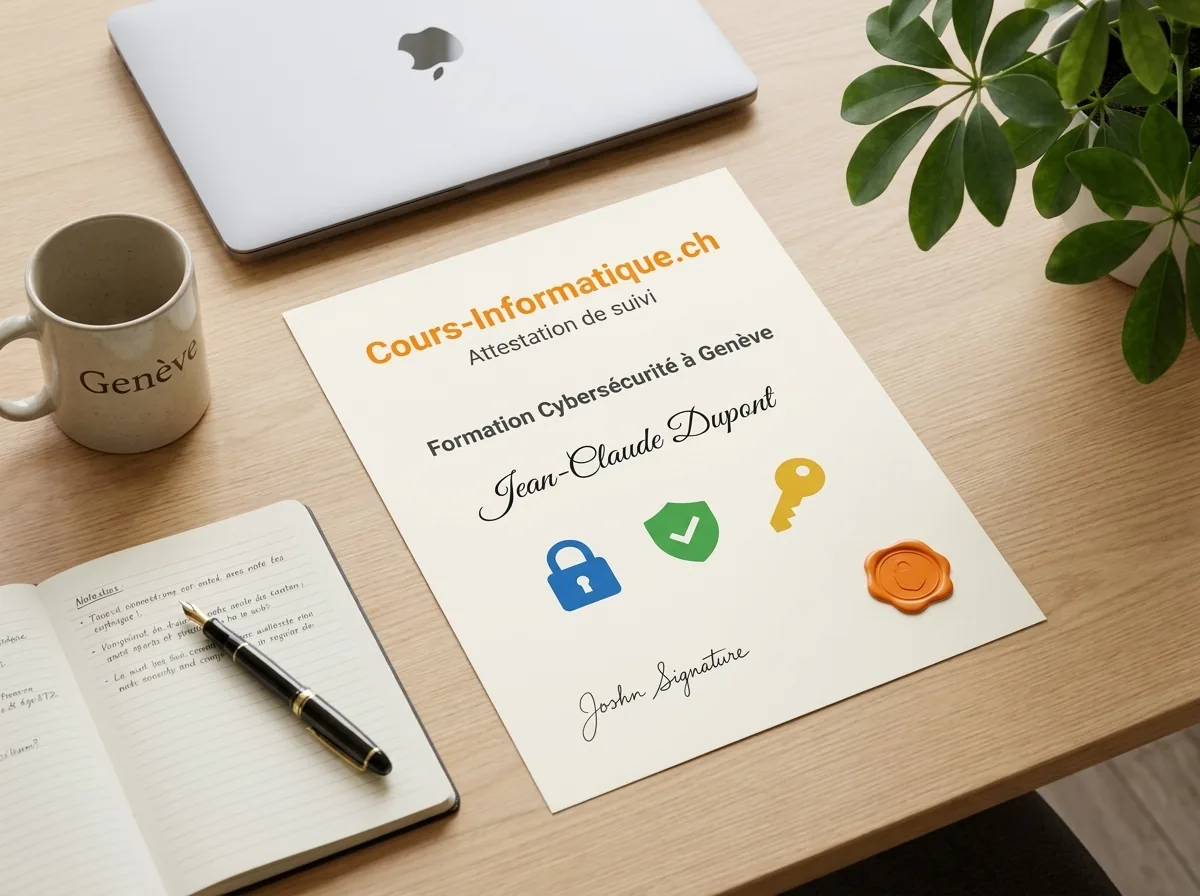
Cours-Informatique.ch certificate of attendance, cybersecurity training in phishing and data protection in Geneva
  • Modules covered: passwords, phishing, backup, browsing
  • Skills gained, detailed by module and by level
  • Number of hours of training completed
  • Valuable in an SME for raising team awareness

An honest comparison
for cybersecurity in Geneva

We are not the only option. Here are the serious alternatives in Geneva in 2026, and what genuinely differs.

Criterion Cours-Informatique.ch Our offer Group training in Geneva (IFAGE, CEFCO and similar) Independent teacher (Anibis, JobUp) NCSC guides, YouTube, free articles
Format Always one to oneGroup of 8 to 20 peopleOne to one, quality variesOn your own, with no audit of your situation
Pace Your real situation, your own devicesFixed dates, fixed syllabusDepends on the teacher availabilityWhenever you can, with no structure
Location Your home (included in Eaux-Vives) or our Eaux-Vives officeAt the school (Plainpalais, Carouge)Varies with the arrangementAt home
Follow-up and adaptation Homework, WhatsApp, certificate of attendancePDF handout, little individual follow-upDepends on the teacher, rarely structuredNo human being, you handle it alone

The best choice depends on your profile. Group courses are perfect if you are looking for social contact. Free tutorials suit you if you learn on your own. We are at our best when you want a concrete result, fast, without learning ten useless things and staying stuck on the one that matters.

How long does it take to learn?

Cybersecurity is learned first through the right everyday habits, then by understanding how the attacks work, and finally by putting advanced protections in place.

Step 1

Discovery pack

1 to 5 h of one-to-one lessons

  • Identify scams by text message (fake CFF, fake TWINT, fake PostFinance parcel) and phishing emails before you get caught.
  • Turn on two-factor authentication (2FA) on your essential accounts: email, e-banking, social media.
Step 2

Going further

6 to 12 h of one-to-one lessons

  • Secure your home Wi-Fi network and understand the risks of public networks in cafes, hotels and airports.
  • Master the privacy settings on your devices (iPhone, Android, Mac, PC) and on your social media accounts.
Step 3

Mastery

13 to 20 h of one-to-one lessons

  • Set up a VPN and understand when and why it is genuinely worth using.
  • Teach the right security habits to the people around you or to your colleagues.

These steps are orders of magnitude. We work out the exact number of hours together, based on your goal, your pace and your availability. Call us for free personalised advice.

Frequently asked questions
about the cybersecurity course

Do you run this training inside companies?
Yes, we come to companies and institutions across the canton of Geneva. We adapt the content to what your staff actually need, whether that is raising awareness of good practice across every team or training one department in particular (HR, administration, IT, and so on).
Are lessons held remotely, or only in person in Geneva?
We prefer lessons in person, either at your home or in our offices in Geneva: Eaux-Vives. It makes for a warmer, more personal exchange. That said, we can also run sessions remotely by video call if that suits your preferences or where you are based.
How much does a cybersecurity training session cost?
The rate is 140 CHF an hour for individuals, and it varies with the number of participants for companies. Our training is invoiced and tax-deductible as part of a professional approach (continuing education, career change, self-employed activity, and so on). We can also help you apply for a subsidy from the State of Geneva (unemployment, disability insurance, Hospice général).
Do you offer other training courses for companies?
Yes, alongside cybersecurity we run several other professional training courses in companies. Among them: Artificial intelligence training: understanding and using AI tools concretely in your job (ChatGPT, automation, generative AI, and so on). Office software training: Word, Excel, PowerPoint, to work faster and collaborate better. Social media training: Instagram, LinkedIn, TikTok, to grow your online presence and get the practices right. All of them are tailored to the profiles and goals of your teams.
Can this course help me avoid online scams and attempted fraud?
Yes. The cybersecurity course is built to help you recognise and avoid digital scams before it is too late. We go through real cases together: fraudulent emails, fake texts, suspicious calls, fake invoices and WhatsApp messages, so you learn to spot the warning signs and pick up the right reflexes.
Is the course suitable if I am not comfortable with computers?
Yes, completely. The cybersecurity course is also made for non-technical people, beginners and seniors. Everything is explained simply, without jargon, with everyday examples so that anyone can put good practice in place straight away.
Can I learn to protect my personal and professional data?
Yes. The course teaches you to protect your data, passwords, online accounts, documents and sensitive information, both personally and professionally. We also cover backups and the essential settings.
Is it useful for small businesses and self-employed people?
Yes. Small businesses, self-employed people and associations are often prime targets for cyberattacks. The cybersecurity course fits their reality and puts simple but effective measures in place, with no complex infrastructure.
Does the course cover security on smartphones and computers?
Yes. We cover security on your computer, your smartphone, your email and the internet. This course pairs very well with the Mac and PC computer lessons and with the iPhone and Android smartphone lessons, for protection across everything you do digitally.
Can the course be adapted to the real risks in my line of work?
Yes. The course is tailored to your activity, your sector and your habits. We adapt the examples and the priorities to the risks the participants genuinely face.
Is the course useful for raising awareness among staff?
Yes. It works very well for raising a team's awareness of digital risk. Staff leave with concrete reflexes and a better grasp of what cybersecurity means day to day.
How long does the cybersecurity course last?
How long the cybersecurity course lasts depends on your needs and your level. It can take the form of a short one to two hour workshop for quick awareness raising, or of deeper sessions spread over several hours to go through the risks in detail and put lasting good practice in place. The course is flexible and tailored, for individuals and companies alike.
Does the cybersecurity course come with a certificate in Geneva?

At the end of your cybersecurity course, we give you a personalised certificate of attendance setting out the modules covered (passwords, anti-phishing, backup, safe browsing), the skills you have gained and the number of hours completed. It is worth putting on your CV and showing Geneva employers, particularly for administrative, IT or in-house roles that call for awareness of digital risk.

How much does a cybersecurity lesson or training course cost in Geneva?

Our one-to-one lessons and cybersecurity training courses are charged at 140 CHF/h, with no commitment and no subscription. You decide session by session on the pace that suits you.

  • Travel to your home: included in the Eaux-Vives area, 20 to 100 CHF for other neighbourhoods and municipalities depending on distance.
  • Gift cards: 2h (300 CHF), 4h (600 CHF), 8h (1 200 CHF) and 12h (1 800 CHF) packages, valid for 12 months.
  • Referrals: recommend someone close to you and receive a free hour of lessons.
  • Annual training voucher: if the course serves your working life, you can apply to the State of Geneva for a subsidy, before the course starts.

Call 078 238 20 71 for free advice on the number of hours that fits your goal, whether that is quick awareness raising, securing the family or training an SME team.